
Adjunctive Therapies
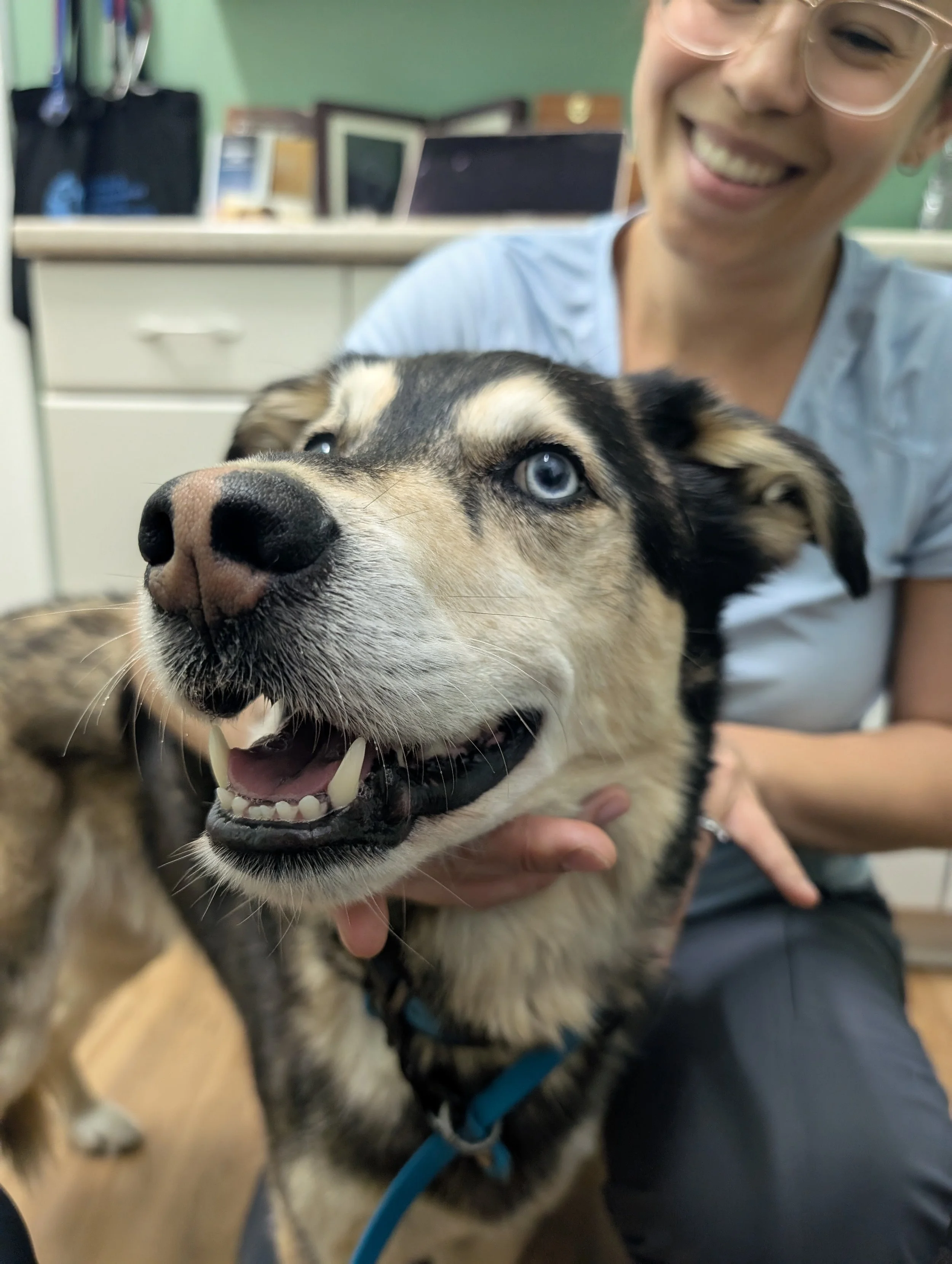
Soft tissue therapy
Myofascial release, aka soft tissue therapy, is a movement-based massage technique. It is used to treat problems with the muscles, tendons, ligaments, fascia, and nerves. Tense and tight muscles, whether from trauma or overuse, can alter movement patterns and cause gait abnormalities or behavioural changes (e.g. hesitancy jumping, decreased desire to play, refusing the stairs). Muscle spasm and tension can also entrap nerves, which can cause numbness, weakness, and/or sensory dysfunction. When used in conjunction with joint manipulative techniques, soft tissue therapy can help with the following:
restore mobility/flexibility
increase range of motion
reduce pain
decrease muscle spasm and knots
improve functional capacity
INDICATIONS FOR SOFT TISSUE THERAPY:
chronic back, neck, shoulder, or hip pain
repetitive strain or overuse injuries
muscle imbalances and hypertonicity
post-surgical rehabilitation and scar tissue management
acute injuries
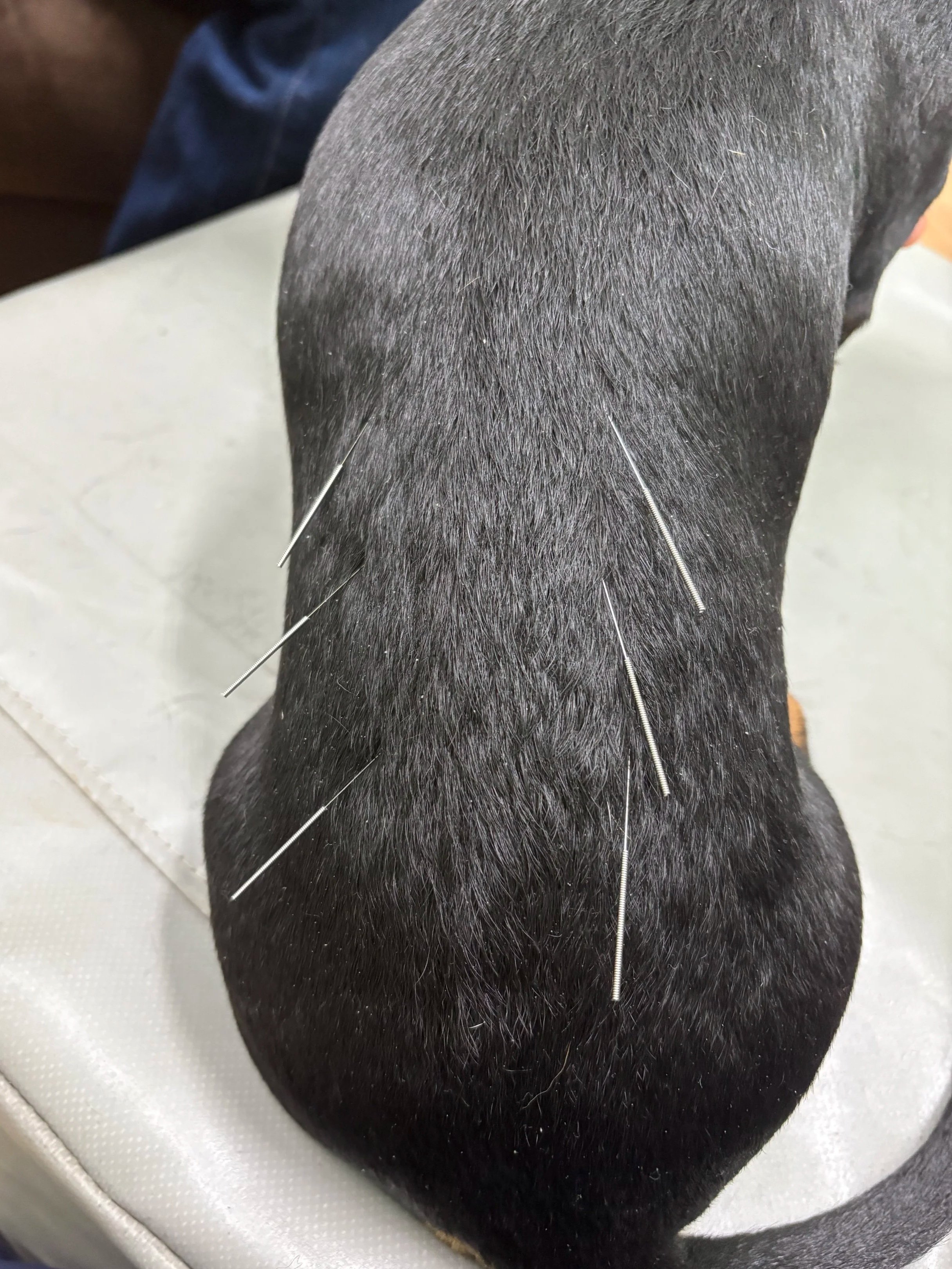
Neurofunctional acupuncture
Acupuncture is a technique involving the use of very fine, solid needles. When inserted into anatomical points specific to your pet’s condition, they can stimulate the nervous system for a therapeutic response. Research shows that a trial of acupuncture therapy can result in the following changes:
improved motor control and activation
decreased muscle tension or spasm
reduced pain
increased sensory input
improved circulation
decreased inflammation/swelling
When performed by a certified practitioner, acupuncture is a safe and effective therapy. Adverse events are RARE. With the use of high reward treats, pets are typically very tolerant of needle insertion. Once all of the needles are placed, the animal is able to rest for fifteen minutes before they are removed. Though possibly uncomfortable, it will not harm them if they choose to move around with the acupuncture needles in place.
INDICATIONS FOR ACUPUNCTURE:
pets who are unable to tolerate manual therapy — may be due to elevated pain levels, mobility concerns, or post-operative recovery
diagnosed neurological dysfunction — e.g. myelopathy, radiculopathy, nerve palsy (research shows improved outcomes if deep pain sensation is preserved)
gentle palliative and hospice care
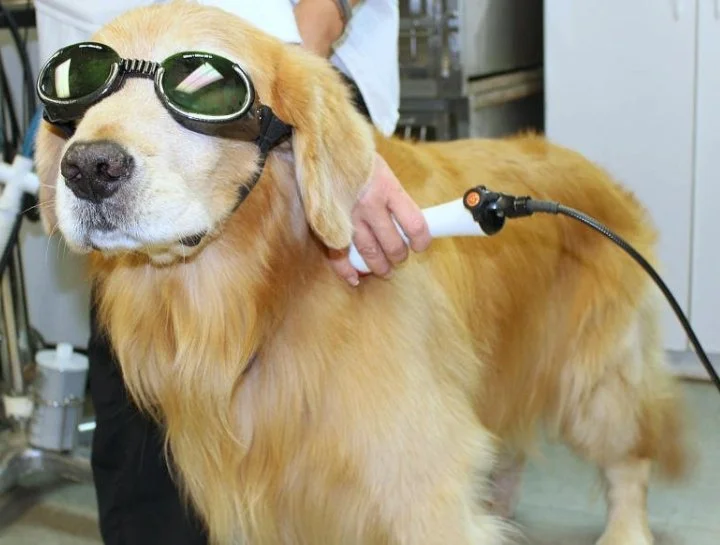
Laser Therapy
Low-level laser therapy is a form of photobiomodulation… but what does that mean? The therapeutic laser provides light at specific wavelengths that are absorbed into the cells, where it stimulates the mitochondria to induce a chemical response and impact biological processes. Laser therapy can help:
reduce pain
decrease inflammation
improve cell turnover/healing rates
INDICATIONS FOR LASER:
joint pain - sprains, dysplasia, cruciate tears
osteoathritis
post-operative procedures
tendinopathies and muscle strains
intervertebral disc disease
degenerative myelopathy
acute injuries/trauma